About Sheathing Pipe
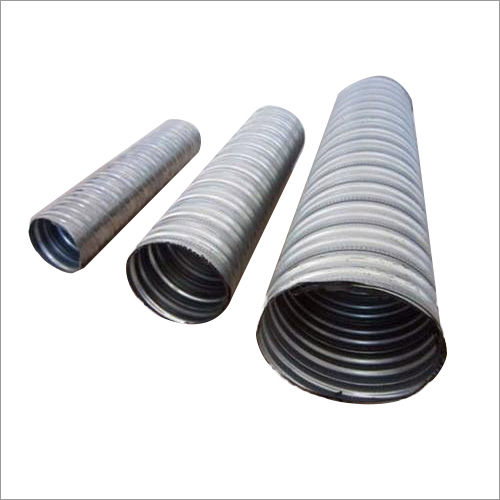
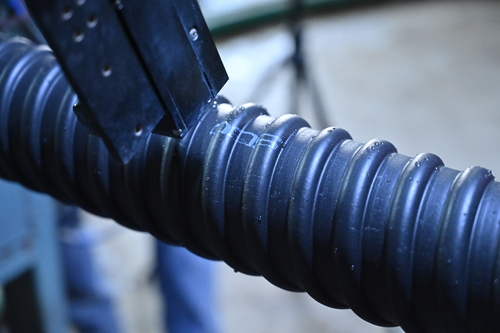
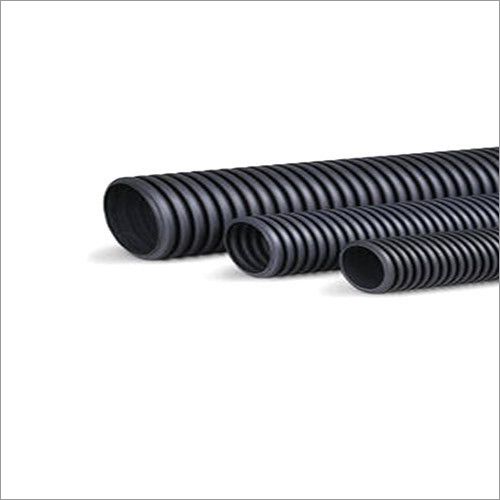
Our offered Sheathing Pipe is highly useful in chemical, oil refinery and agricultural industries for transferring fluids from one place to another place. It is available in various sizes and can be customized according to the needs of our valued customer. This pipe is made under the guidance of our expert professionals by using latest technologies as per the set industrial norms. Further, it is checked by our quality controller on different quality parameters before delivering to our valued customer end. Our provided Sheathing Pipe is ideal for use in high corrosion prone areas and produced from high-performance resin.
Product Details
| Usage | Industrial |
| Feature | Corrosion Resistant And Rust Proof |
| Surface Finished | Polished |
| Length Per Pipe | 3 - 100 meter |
| Size | 3 inch |
| Unit Pipe Length | 18 meter |
Robust Protection for Prestressing TendonsOur high-performance steel sheathing pipes ensure the long-term safety and durability of prestressing tendons in concrete structures. With high corrosion and heat resistance, smooth or galvanized finishes, and quality end protectors, these pipes safeguard against environmental and chemical challenges. Theyre especially well-suited for critical post-tensioning projects such as bridges, flyovers, and large-span structures.
Customizable for Diverse ApplicationsAvailable in both flexible and rigid forms, with options in spiral corrugated or round designs, these pipes are manufactured as per your precise requirements. Sizes (outer diameter: 40130 mm, thickness: 0.30.6 mm, lengths up to 6 meters) and finishes can be tailored to your project needs. We ensure reliable supply, whether for exporters, importers, or domestic suppliers across India.
FAQs of Sheathing Pipe:
Q: How are sheathing pipes manufactured and what materials are used?
A: Sheathing pipes are produced using a helical corrugation process from high quality or mild steel. The technique involves cold rolling or forming steel sheets into spiral corrugated or round pipe shapes, then applying surface treatments such as galvanization or oiling. These processes ensure excellent mechanical strength, flexibility, and corrosion resistance.
Q: What are the main benefits of using these sheathing pipes in construction projects?
A: They offer superior protection for prestressing tendons against corrosion, chemicals, and weathering. Their heat resistance up to 300C and durable galvanized or smooth surface guarantee longevity in challenging environments, making them ideal for bridges, flyovers, and all types of post-tensioning or prestressed concrete structures.
Q: When is it recommended to use flexible versus rigid sheathing pipes?
A: Flexible pipes are ideal for complex or curved tendon layouts requiring adaptability, while rigid pipes are suited for straight runs or applications demanding extra mechanical strength. Selection depends on the structural design and site requirements of your project.
Q: Where can these sheathing pipes be delivered and what is the minimum order quantity?
A: We can supply these products to any Indian port as per your preference. The minimum order quantity is 500 meters, making it suitable for both large-scale and medium-sized infrastructure projects.
Q: What customization options are available for size, length, and surface finish?
A: You can specify the outer diameter (40 mm to 130 mm), thickness (0.3 mm to 0.6 mm), and lengths up to 6 meters. Surface finishes are available as smooth or galvanized, and end protectors are offered as plastic or metal caps based on your preferences.
Q: How do these pipes ensure the safety and longevity of concrete structures?
A: By encasing and shielding the prestressing tendons from external influences, these pipes help prevent corrosion and deterioration. Their robust construction, accurate tolerances (0.2mm), and standardized production maximize the structural lifespan and stability of critical infrastructure.
Q: What connection methods are provided for assembling or joining the pipes?
A: Connections can be made using sleeves or couplers, which enable secure and efficient assembly on the job site, ensuring continuity and ease of installation as per project needs.
 English
 Spanish
 French
 German
 Italian
 Chinese (Simplified)
 Japanese
 Korean
 Arabic
 Portuguese









 Send Inquiry

 Send Inquiry

 Send Inquiry
 Send SMS