About Post Tensioned Concrete Slab
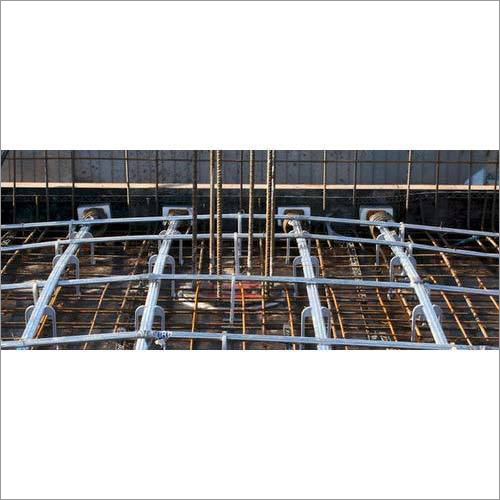
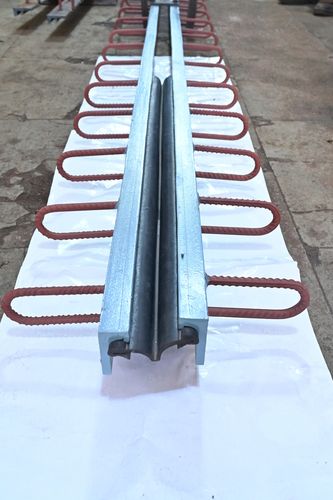
With 6 years of field experience, we are one of the leading enterprises engaged in manufacturing and supplying Post Tensioned Concrete Slab. This one is highly appreciated in the market for offering various advantages that include fire resistant, sound control, reduced material use, convenient speed, and robustness. Thus, to deliver the best quality products, we only use supreme quality materials and new progressive techniques. Post Tensioned Concrete Slab utilizes high-strength tensioned steel strands for compressing slabs, keeping concrete in compression. Further, we pack it in high-quality packagings to avoid any damage during transition.
Product Details
|
Strength
|
2000 psi
|
|
Usage/Application
|
Industrial
|
|
Material
|
Concrete
|
|
Thickness
|
8 inches
|
High Span and Load CapacityThese post-tensioned concrete slabs are engineered to carry loads of up to 600 kN/m and span distances reaching 20 meters. With variable slab thicknesses between 150 mm and 300 mm, they provide robust support for large-scale structures such as commercial buildings, vehicle parking decks, or bridges, optimizing space by reducing the need for intermediate columns.
Advanced Protection and DurabilityThe incorporation of epoxy-coated or galvanized tendons shields against corrosion, ensuring longevity even in demanding conditions. Combined with fire resistance up to 2 hours and high-strength concrete, these slabs deliver dependable structural integrity over the long term while withstanding harsh environments and temperature variations up to 60C.
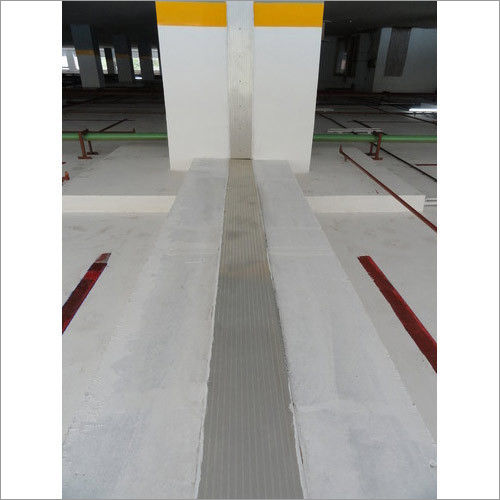
Versatile Application and InstallationSuitable for both new builds and renovation projects, these slabs can be installed using cast-in-situ or precast methods. The flexibility to customize shapesrectangular or otherwiseand apply smooth surface finishes enables architects and engineers to meet design goals efficiently across commercial, residential, parking, and infrastructure projects.
FAQs of Post Tensioned Concrete Slab:
Q: How is a post-tensioned concrete slab installed in construction projects?
A: A post-tensioned concrete slab can be installed using either a cast-in-situ method, where the slab is formed and poured on-site, or via precast placement, where slabs are manufactured off-site and transported for installation. The steel tendons are tensioned after the concrete reaches a specified strength, anchoring the slab and increasing its structural capacity.
Q: What are the main benefits of using post-tensioned slabs over conventional reinforced concrete?
A: Post-tensioned slabs allow for larger spans (up to 20 meters) without intermediate columns, support higher loads (up to 600 kN/m), and reduce overall structural depth. They also minimize cracking, provide a smooth finish, and offer improved fire resistance and durability through advanced corrosion protection.
Q: When should I consider using post-tensioned concrete slabs in my project?
A: These slabs are ideal whenever your project requires long clear spans, high load capacities, or fast construction timelinescommonly found in commercial buildings, residential towers, parking structures, and bridge decks. They are particularly advantageous in projects with limited support points or where maximizing usable space is crucial.
Q: Where are post-tensioned slabs most commonly applied?
A: Post-tensioned concrete slabs are extensively used in commercial and residential structures, multilevel parking garages, and bridge decks. Their customizable dimensions and robust performance make them suitable for a wide range of structural applications, especially where design flexibility and strength are priorities.
Q: What process is involved in ensuring corrosion protection for the steel tendons?
A: To safeguard the tendons, either epoxy coating or galvanization is applied, depending on project requirements. These protective layers prevent moisture and contaminants from reaching the steel, which is vital for maintaining long-term structural performance, especially in environments prone to corrosion.
Q: How does the fire resistance rating of up to 2 hours benefit my structure?
A: The fire resistance of up to 2 hours provides essential protection by maintaining structural integrity during fire incidents. This window is critical for evacuation, reduces potential damage, and is compliant with fire safety standards for commercial and public structures.
Q: What types of steel tendons are used, and how are they anchored?
A: Both unbonded and bonded steel cables are utilized as tendons, chosen based on design needs and project specifics. The tendon anchorage system securely fixes these cables at either end of the slab, ensuring effective tension transfer and long-lasting performance of the structure.
 English
 Spanish
 French
 German
 Italian
 Chinese (Simplified)
 Japanese
 Korean
 Arabic
 Portuguese









 Send Inquiry

 Send Inquiry

 Send Inquiry
 Send SMS